
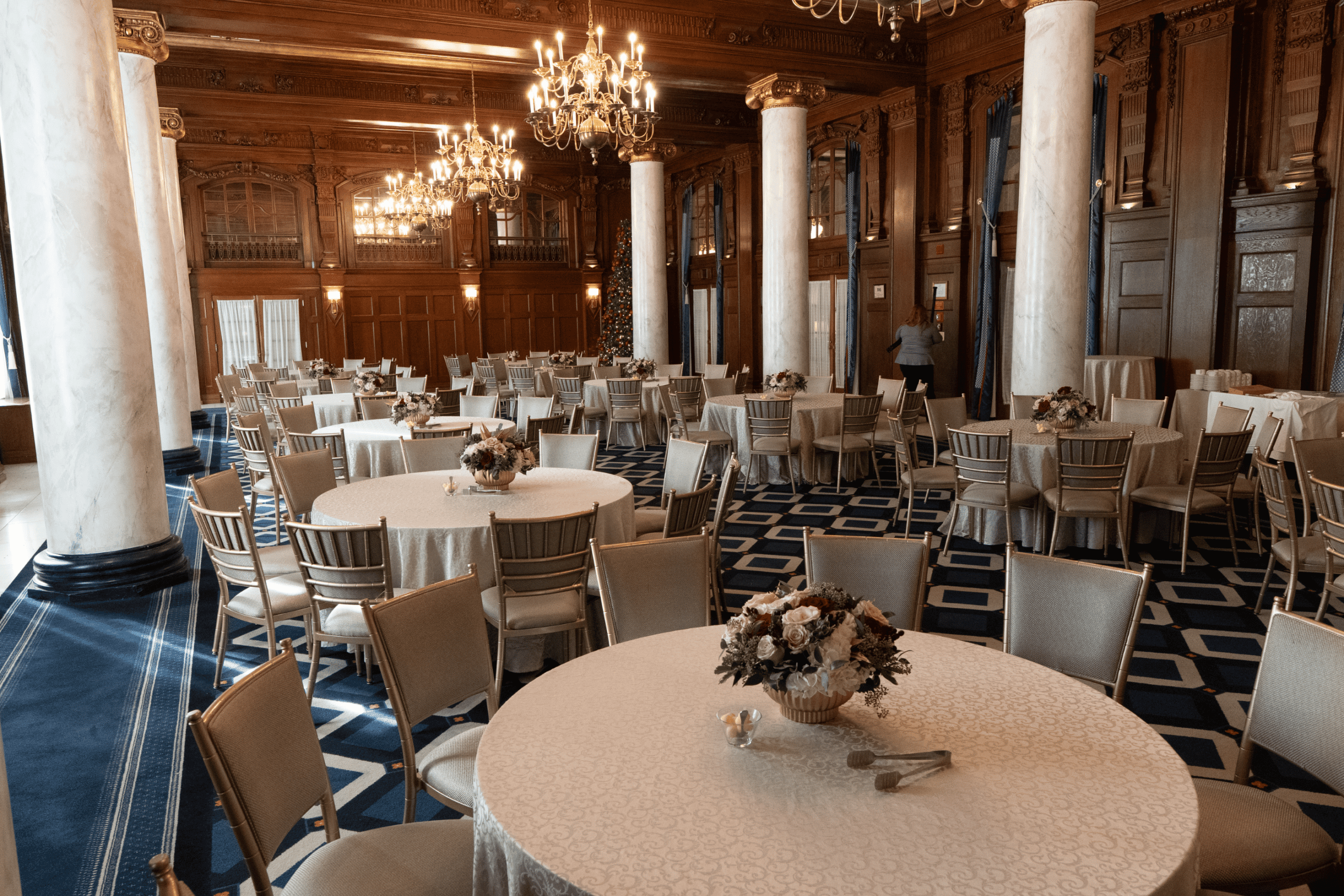

An event begins long before the first guest arrives. In most cases, setup starts hours or days in advance, as teams work through a carefully planned sequence to transform an empty venue into a memorable experience.
The setup day is where strategy becomes execution. Every piece of furniture, every sign, every lighting fixture, and every piece of technical component serves a purpose. Together, these details shape how guests navigate a space, where they direct their attention, and ultimately, how they experience the event.
What may appear effortless to an attendee is often the result of countless hours of planning, coordination, and precision behind the scenes.
Load-In: Getting Everything in Place
The first step is getting vendors, rentals, equipment, and production materials into the venue. A successful load-in requires careful coordination between event managers, vendors, production teams, venue staff, and other partners to ensure everything arrives on time and in the correct order.
Organization is critical. When multiple teams are simultaneously working alongside one another in the same space, knowing what is arriving, where it needs to go, and when it needs to move prevents potential scheduling delays and ensures the setup sequence moves efficiently.
To stay on track, events teams rely on detailed layouts, diagrams, reference materials, and production timelines prepared ahead of time to guide the process. These tools help everyone understand not only where an item belongs, but how each part of the setup fits into the overall event design.
Staging and Layout: Turning the Plan Into Reality
Once materials are on site, the structure of the event begins to take shape.
Staging, pipe and drape, signage, furniture, decor, and other set elements begin transforming an empty venue into a unique event environment. Plans developed well in advance evolve from digital renderings and diagrams into a fully enveloped space.
The stage is often the central focal point of the venue. Its placement determines the orientation of seating, signage, screens, and other elements, while also influencing how attendees will move through the space.
At this stage, precision matters. A small change in the placement of one element can affect the entire room, which is why setup teams work carefully from the original plans while remaining prepared to make adjustments on-site.
Spatial Flow: Designing the Guest Experience
The placement of tables and chairs is about much more than appearance. Every piece of furniture is intentionally positioned to support the flow and function of the event.
Teams use seating diagrams and floor plans to ensure spacing, capacity, sightlines, and traffic patterns align with the event plan. Once everything is physically in the room, however, adjustments are sometimes necessary.
The size and shape of the venue, safety requirements, accessibility needs, and real-world conditions can all influence the final layout. Experienced event teams know how to make these changes without losing sight of the original vision.
As furniture, set pieces, and décor fall into place, the room begins to look less like an empty venue and more like the event guests will experience.
Technology and Production Checks
With the physical build taking shape, production teams turn their attention to the technology that will support the event.
Audio, visual, and lighting systems are installed and tested to ensure the show can run as planned. Microphones, screens, projectors, speakers, lighting fixtures, and all technical components must work together seamlessly: This is where sound checks, lighting checks, rehearsals, and run-throughs become critical. Teams test transitions, confirm timing, and identify technical issues before guests are in the room.
The goal is simple: solve problems before they become visible to the audience.
In many cases, the most successful productions are defined by the issues attendees never experience because they were identified and resolved during setup.
Final Walkthrough and Finishing Touches
Before the doors open, the event team conducts one final walkthrough of the venue.
Event planners, venue staff, production teams, security personnel, and clients review the space together to confirm everyone understands the event flow, guest movement, access points, schedules, and individual responsibilities.
This final inspection is also an opportunity to focus on the details that elevate the overall experience. Are the chairs perfectly aligned? Is the signage clearly visible? Is the space clean and presentation-ready? Are the lighting, temperature, and background music creating the desired atmosphere?
Viewing the event from the guest’s perspective allows the team to make those last adjustments that often make the biggest difference.
The Transition to Show Time
Eventually, the setup fades into the background.
Staff move into position. Vendors complete their final tasks. Production teams take their places behind the scenes. The venue is ready to welcome its first guests.
What began as an empty space has been transformed into a carefully designed environment built to support the program, guide attendees, and create a memorable experience.
For guests, the transition often feels effortless—and that’s exactly the goal.
The Work Behind the Experience
Event setup is where months of planning, strategy, and collaboration come to a tangible reality.
Guests rarely see the detailed floor plans, carefully coordinated load-in schedules, technical rehearsals, or last-minute adjustments that happen before the doors open. Yet every one of those behind-the-scenes efforts contributes to the experience they enjoy from the moment they arrive.
The best event setups aren’t necessarily the ones guests notice most. They’re the ones that feel intuitive, seamless, and natural—allowing attendees to focus entirely on the event itself.
That level of execution doesn’t happen by chance. It’s the result of preparation, communication, attention to detail, and a team committed to bringing every element together flawlessly.
At ESI, we understand that an event begins long before guests walk through the doors. Setup day is where the vision comes to life—and where the countless details guests may never see come together to create an exceptional experience.