

How credential systems function as operational infrastructure, not just access badges.
Before the technical groundwork can even be laid for an event, access to a high-end venue must be managed and streamlined. From the production team and talent, to the VIPs, the media, and attendees—credentialing acts as a guide for access and movement. Credentialing is not just a physical barrier for operational security; it dictates the rhythm of an event and a team’s efficiency.

ESI recognizes the importance of proper credentialing to promote operational reliability while also guaranteeing effective crowd control. Badging is not just an integral practice for when the doors open for an event, but plays a role from the moment “Load-In” and set-up occur, to when “Load-Out” or the “Strike” takes place. When dealing with thousands of attendees in five-star venues, a team’s energy wanes, so security and operational understanding can not be an afterthought and must be designed in advance.
Credentialing Ensures Security and Trust: The primary role of an event badge is to guarantee that access to a venue is permitted, while also controlling where an individual can move within a site. This is known as “Access Control.” Proper credentialing supports role-specific security, while also promoting a client’s confidence that their showcase will remain uncompromised and militantly secure.
Badging or wristbands should not only serve as a visible entry ticket—they should also incorporate security elements. From tracking the ownership of credentials through proper labelling, to physical security elements such as UV-activated reflections, holographic overlays, or tamper-proof materials—credentials should reflect clear ownership and ensure precise accountability.
Beyond establishing trust with the client, proper badging allows security personnel or law enforcement to maintain secure spaces. For a Fortune 100 company or a political advocacy campaign, controlling and tracking access can mean the difference between protecting intellectual property or sensitive information and revealing internal matters to unknown parties. Security teams should be able to swiftly identify who has access to a space to mitigate threats.
Distribution Dictates Efficacy: Credentialing is not as simple as just giving out wristbands or passes; proper venue “Access Control” necessitates an organized, trackable system to ensure accountability and reliability. If a pass goes missing or is misplaced, a credentialing framework must be adaptive and redundant.
A “Credential System” must be foolproof and minimize vulnerabilities. Staff and guests misplace passes, attendees are photographed wearing credentials by the media, and when dealing with high-impact events, non-invitees want access. The threats of credential duplication or attempted venue breaches are real and should be considered when building out the access framework. ESI understands the concern of vulnerability, ensuring rigorous organization from the beginning.
Credentials must be numbered or labeled to identify ownership or proactively prevent potential breaches. Furthermore, a team must be diligent when distributing credentials—especially in bulk—regarding an individual’s intended use or status. A credential should be used as a necessity to allow an attendee to fulfill their specific goal or responsibilities, not provided to fulfill curiosity.
Establishing Efficiency and Streamlining the Process: Credentialing staff and attendees not only ensures a sterile environment but, if done correctly, can streamline the production team’s efficiency and the guest experience. Organized permission assignments eliminate guesswork and allow for elite production teams to focus on the task at hand: delivering an impactful experience that transcends client expectations.
When an operations team properly disseminates privileges, a universal language is established. Production staff know who to communicate with, and local crews can successfully operate with ease and understanding. No one is left wondering who is in charge and who has the authority to complete a specific task in a certain area.
Credentials do not just protect the “Back of House” or the operational areas that are hidden from public view; they assist in organizing the “Front of House”—spaces seen by attendees, guests, and media. Rather than staff needing to constantly direct attendees and easily becoming distracted from key responsibilities, an elite organization proactively dictates protocol and adequately conveys that information to those on the ground.
Influencing the Guest Experience: With color-coded designs featuring event dates, identifiable roles, and clearly labeled access permissions, operations teams plan for effective and understandable credential frameworks. A great badge should be useful to security and event staff, but also understandable to the general attendee or client.
Credentials do not just alter crowd behaviors, but can influence the psychology of invitees themselves. If ineffective, badges can become a burden on the guest experience. Disorganized registration processes, confusing zoning and signage, or poor credential design can completely invalidate the purpose of credentialing. Elite teams design check-in processes and checkpoint protocols far in advance, allowing ample time for changes, reprints, or redesign.
Beyond their operational role, credentials can also help in “rolling out the red carpet” for high-importance attendees. Teams should strive to create role labels that are both necessary to an event’s operations, but also promote excitement and anticipation about attending an event—driving up attendance numbers and media coverage.
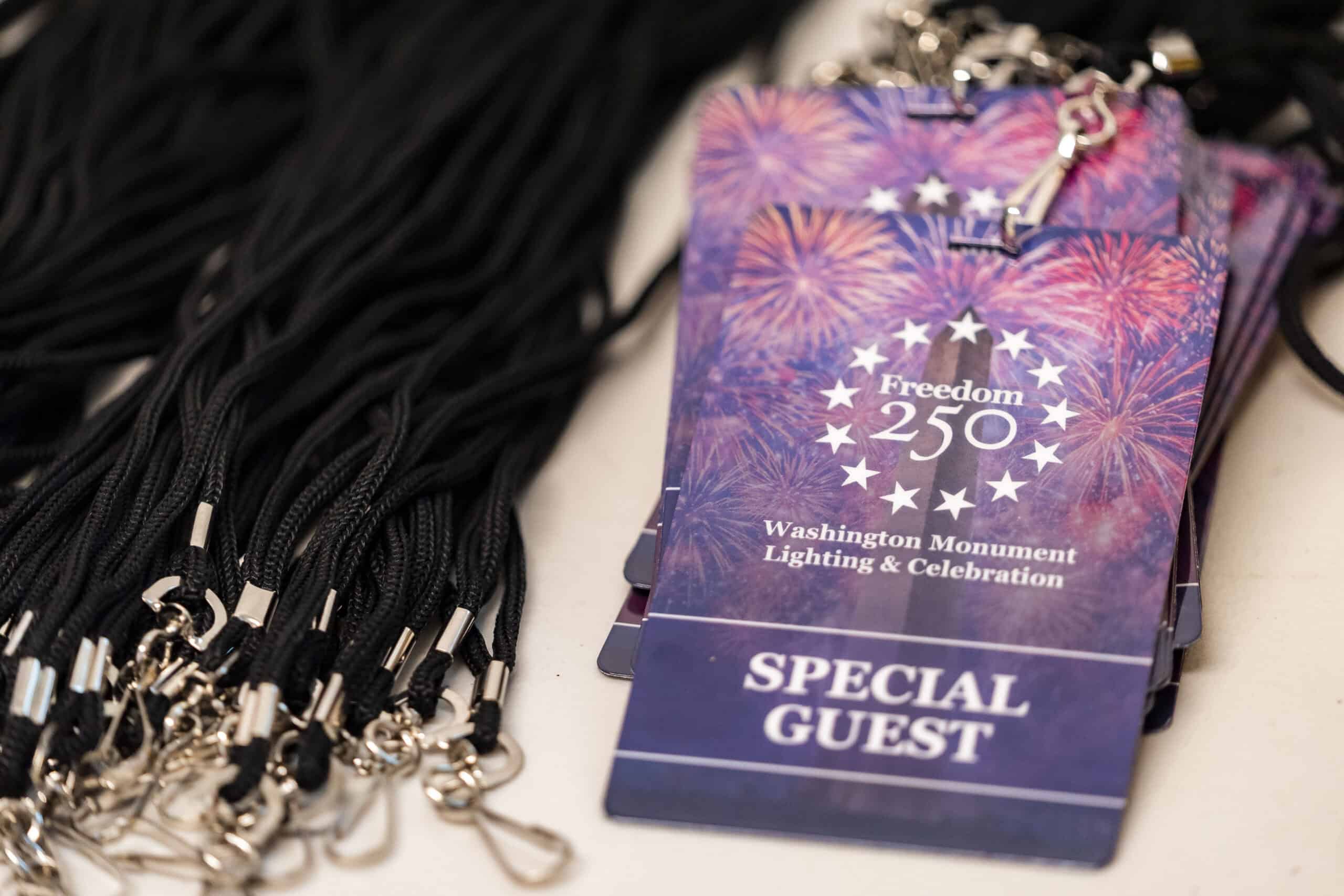
Credentialing in Practice: During a recent high-impact event, ESI operated in a nationally recognized venue that required precise coordination, effective communication, but most importantly, specific “Access Control.” Because our team needed to coordinate closely with law enforcement partners and venue security, it was essential to have simple, easily identifiable badges and passes. These credentials not only enabled us to effectively support our client but also ensured compliance with the strict protocols of the prestigious venue where we operated.
What made this event unique was the venue’s lack of public access after hours. With strict security policies, hundreds of staff working on the production, and a massive production setup, it was important that local crews, contractors, and our team could get on site with ease and simplicity.
Our team coordinated with site security to organize parking placards and to convey our credential framework which integrated our access language with the teams on site. Early on, a large internal effort was launched to ensure that all staff had the specific access necessary to complete their responsibilities to support the team. Most importantly, our credentials eliminated bottlenecks when trucks and equipment were loaded onto site, as contractors were attempting to gain access to the facility, and ultimately as guests began to arrive.
Conclusion: Beyond the Badge Ultimately, controlling access not only maintains the security of an event or its attendees but also alters the very cadence of a production team. When done methodically, credentialing eliminates backups and promotes client confidence before the event even begins.
Credentialing should become second nature as crews move through a site and attendees begin to arrive. While badges and access passes may be designed by a small group, their success depends on cross-functional collaboration and organization-wide awareness. Establishing an effective credentialing framework requires a unified effort—one that enhances security, streamlines operations, and allows teams to remain focused on their primary objective: delivering an exceptional, once-in-a-lifetime experience for the client.