
Few stage elements communicate tradition, professionalism, and patriotism as effectively as the American flag. Whether you’re producing a government ceremony, military event, political gathering, or corporate program, displaying the flag correctly is more than a finishing touch—it’s a sign of respect.
At ESI, we’ve incorporated the American flag into events ranging from intimate ceremonies to nationally televised productions. While every venue and stage is different, the fundamentals of flag protocol remain the same. Paying attention to these details ensures the presentation reflects the significance of the occasion.

Understanding the American Flag
The blue field containing the stars is known as the Union. In nearly every display configuration, the Union should always occupy the position of honor—either at the highest point of the flag or on the flag’s own right (the viewer’s left).
Flags are also manufactured in a variety of materials, and the proper handling of each depends on whether it is intended for indoor or outdoor use.

Essential Flag Protocol
Whether you’re setting a stage, lining a procession route, or installing exterior displays, these are the most important guidelines to remember:
- The American flag should never touch the ground.
- When displayed with the flags of other nations, all flags should be flown at equal height and be approximately the same size.
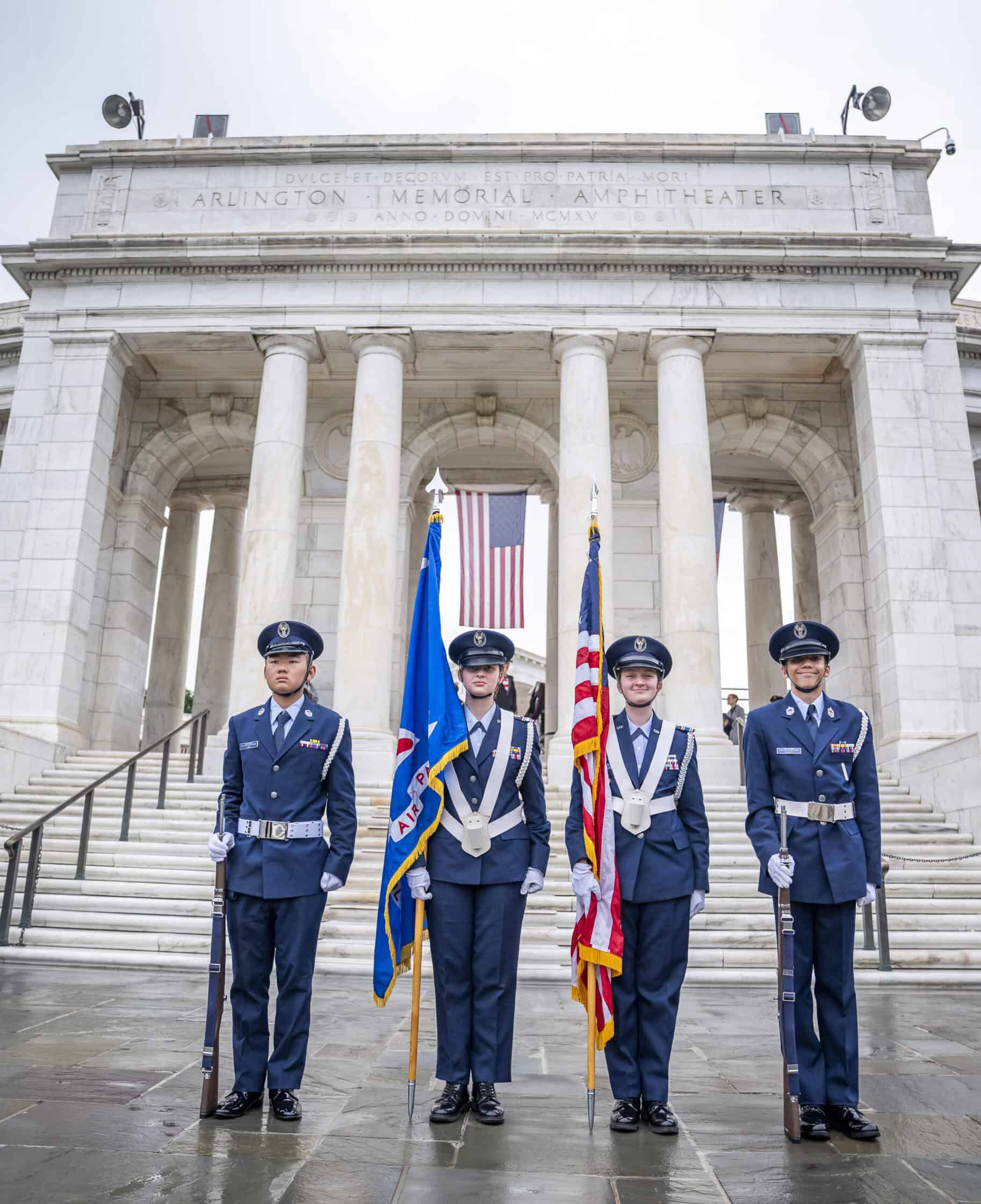
- When displayed alongside state, territorial, or organizational flags, the American flag should occupy the center position and the highest point of the grouping whenever possible.
- When mounted on a staff projecting from a building, balcony, or window, the Union should be positioned at the peak of the staff unless the flag is being flown at half-staff.
- When displayed flat against a wall—either horizontally or vertically—the Union belongs in the upper left from the viewer’s perspective.
- When displayed in a window, the flag should be positioned the same way, with the Union on the observer’s left when viewed from outside.
- When crossed with another flag on staffs, the American flag belongs on its own right, with its staff positioned in front of the other.
Weather Considerations
Not every flag is designed to withstand the elements.
Traditional cotton flags and other non-weather-resistant materials should be taken down at the first sign of rain, snow, or severe weather to prevent permanent damage.
Heavy-duty nylon and polyester flags are designed for outdoor use and can remain displayed through normal weather conditions. Even so, they should be removed before hurricanes, severe windstorms, or other extreme weather events to prevent tearing.
If a flag becomes wet, allow it to dry completely before folding or storing it. If it becomes faded, torn, or otherwise unserviceable, it should be retired and disposed of in a dignified manner.

Production Tips We’ve Learned
Correct protocol is only part of presenting a flag well. Small production details can make a significant difference—especially on camera.
- Steam every flag before it goes on stage. Even minor wrinkles become noticeable under professional lighting and broadcast cameras.
- Use a flag spreader whenever possible to create a clean, consistent drape and help the flag fill the available stage space.
- Ensure every eagle finial is uniform and facing forward.
- If multiple flags are displayed, keep spacing, height, and sizing perfectly consistent for a polished appearance.
The Details Matter
Flags are often one of the first things attendees notice when they enter a venue and one of the most visible elements in event photography and broadcast coverage. Proper flag protocol isn’t simply about following tradition—it’s about demonstrating professionalism and respect for the occasion.
As with every element of event production, the details matter. Getting them right helps create an environment worthy of the people, organizations, and moments being recognized.