
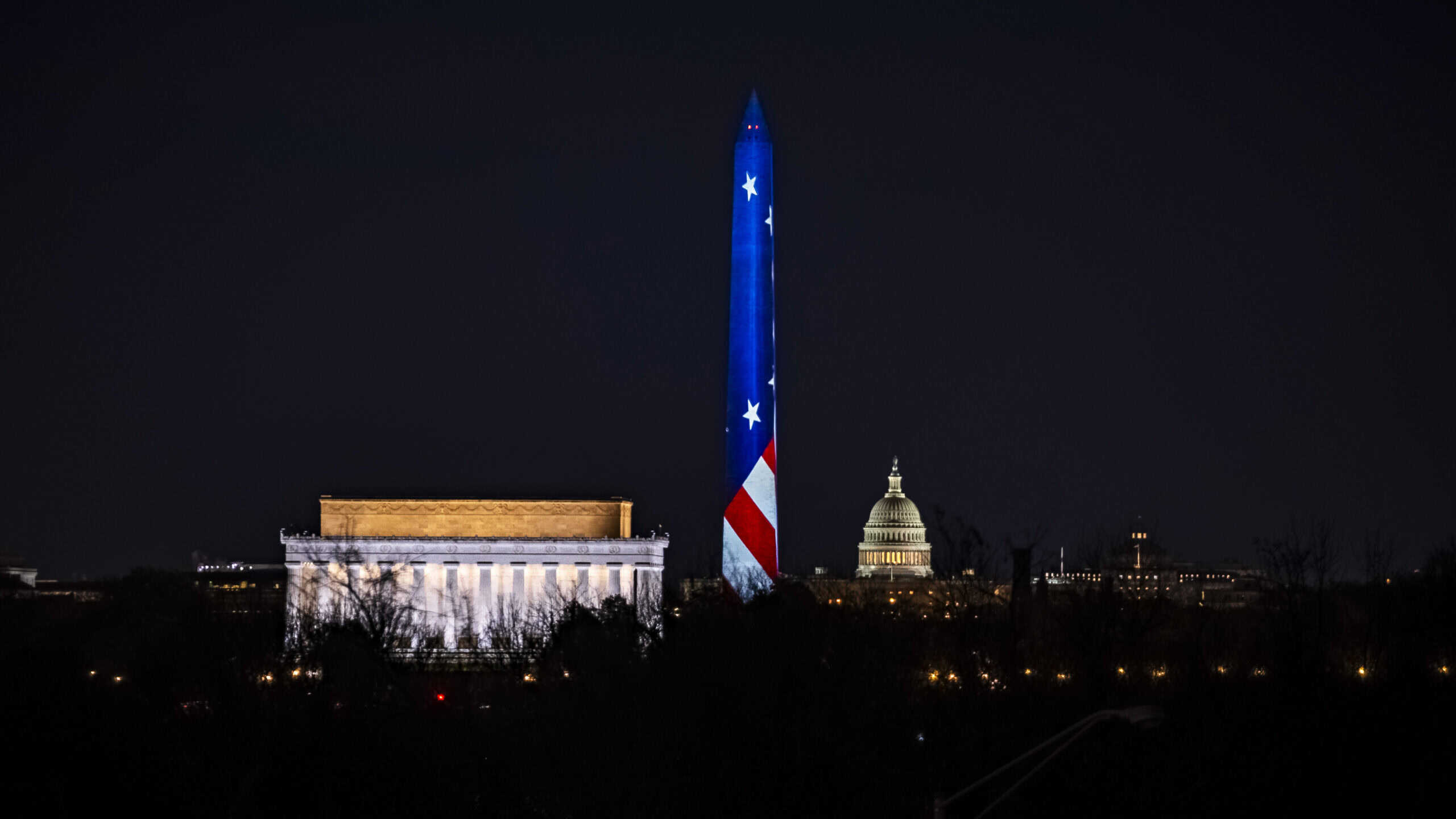

New Year’s Eve on the National Mall is many things—festive, iconic, and historic—but for those of us behind the scenes, it is certainly not the place for guesswork.
As midnight approaches, the atmosphere in D.C. changes. The air sharpens, the humidity of the Potomac turns into a biting frost, and every decision made in a warm office weeks earlier is suddenly thrust into a high-stakes, real-time trial. There are no second chances under the watchful eye of the nation. There are no “quiet resets” when you’re painting light onto the most famous obelisk in the world. On the Mall, there is no room for equipment that was “good enough” in a dry-run at the warehouse but remains unproven in the face of a mid-Atlantic winter.
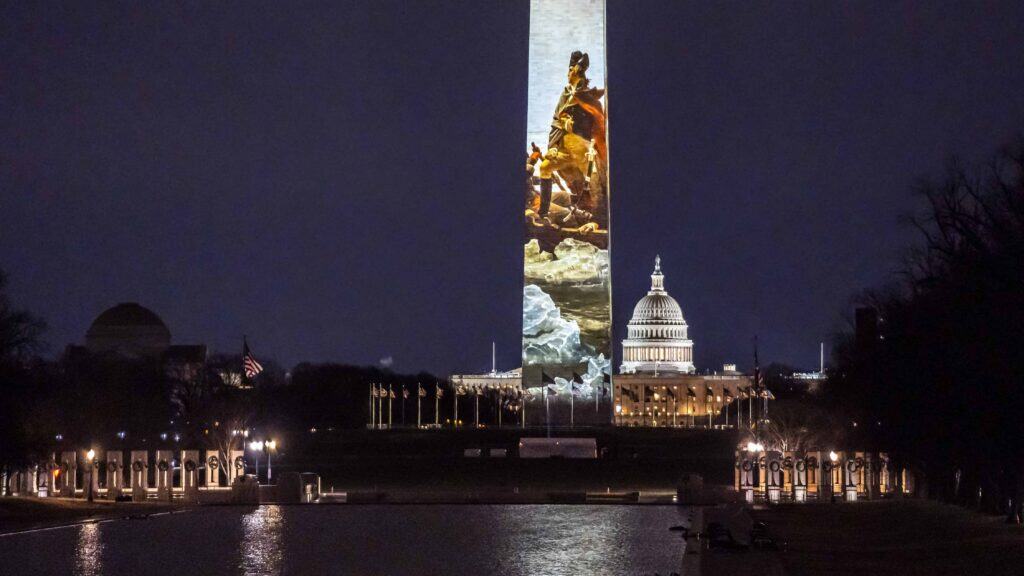
When the Washington Monument becomes your canvas, the standard is binary: it either works beautifully, or it fails publicly. From December 31 through January 5, our team lived on that razor’s edge, transforming five hundred feet of stone into a shared visual experience for thousands on the ground and millions more watching at home.
This wasn’t just a job; it was a mission. And in our world, this is where quality equipment stops being a line item on a budget and becomes the very foundation of our reputation.
When the Margin for Error Is Zero
Events of this magnitude are notoriously unforgiving. If you take a shortcut, the environment will find it. If you overlook a cable rating, the cold will expose it. Projection mapping on a historic monument is fundamentally different from a standard corporate ballroom setup or even a temporary outdoor stage. You are dealing with a structure that demands respect—not just for its history, but for its physical complexity.
There are no controlled environments here. We don’t have the luxury of a climate-controlled booth or easy access points if a server goes down. Every variable matters: the exact degree of the ambient temperature, the buffeting wind speeds at different elevations of the monument, the creeping moisture of a winter mist, and the absolute stability of the power grid.
Winter adds a layer of “invisible” friction. We all know that cold affects the human body, but it’s often overlooked how much it affects high-end electronics. Metal contracts, fans struggle with different air densities, and condensation can become a silent killer for lenses and housings. When you’re running a show for six consecutive nights, you’re not just testing a projector’s brightness; you’re testing its endurance.
The Science of Staying On
In our industry, people tend to get fixated on “lumens”—the raw brightness of a projector. But at this scale, brightness is just the entry fee. The real currency is consistency.
The systems we deployed for the Washington Monument were hand-selected for their ability to run a marathon, not a sprint. When a projector runs for eight, ten, or twelve hours straight in a sub-freezing enclosure, it creates its own micro-climate. Long run times expose the “heart” of the machine: its heat management systems, its internal power regulators, and the stress tolerances of its motherboards.
Industry-leading projectors, such as those from Barco or Christie Digital, are built with a “fail-safe” philosophy. They feature sealed optics that keep out the dust and moisture that a D.C. winter loves to provide, and redundant cooling systems that ensure if one fan meets resistance, the show doesn’t go black. During this project, the cold air was actually a potential teammate for thermal regulation, but only because our equipment was rated to handle it.
Precision: The Art of the Perfect Fit
The Washington Monument is a geometric masterpiece, but it is also a giant, unforgiving mirror of your mistakes. It does not offer “forgiveness” for a misalignment of even a fraction of an inch.
Because the monument is a protected historic site, we cannot modify the surface. We cannot “tweak” the canvas to fit our needs. We have to make the light bend to the stone. This requires a level of optical precision that you simply won’t find in mid-tier gear. When you are projecting from hundreds of yards away, a vibration of one millimeter at the lens translates to a massive blur on the monument’s face.
Our approach prioritized mechanical stability. We used high-grade, rigid mounting solutions and a calibration process that was checked and re-checked against the monument’s unique topography. We wanted Night Five to look identical to Night One. That kind of consistency isn’t a stroke of luck; it’s a result of engineering the “drift” out of the equation.
Planning for the Weather You Can’t Control
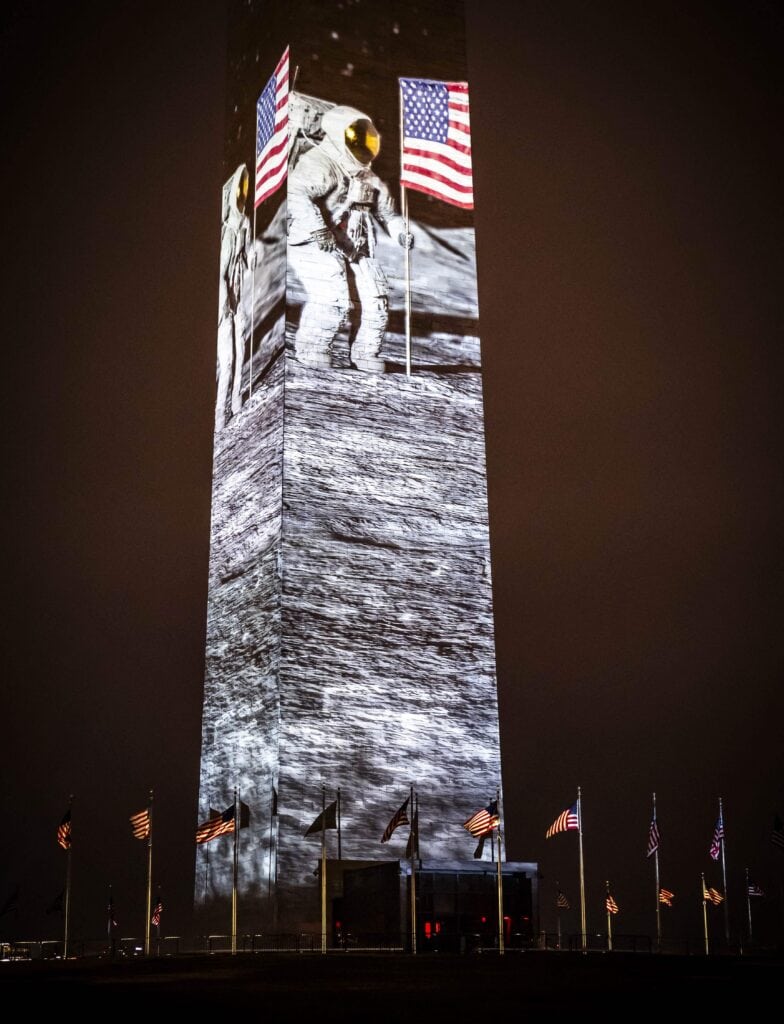
If you work outdoors in January, you have to treat the environment as an active participant in the project. You don’t plan around the weather; you plan for it.
Wind, cold, and freezing rain aren’t “unfortunate possibilities”—they are certainties. For this project, environmental protection was baked into the DNA of our design. We used custom-engineered housings that acted as a literal suit of armor for our tech, ensuring that while the crew was shivering, the projectors were sitting in a perfect, climate-controlled “goldilocks zone.”
We even looked at the power distribution through a winter lens. Voltage can fluctuate when the local grid is stressed by heating demands, so we stabilized our feed to ensure the projectors never saw a “brownout” or a spike. This allowed our technicians to stop being “firefighters” and start being “observers.”
The Invisible Mastery
When the public looks up and sees a beautiful display, they shouldn’t be thinking about the brand of the projector or the gauge of the power cable. They should be lost in the moment. That “effortless” feeling is the ultimate compliment to our work, but it hides a massive amount of labor.
What the crowd doesn’t see are the weeks of stress-testing. They don’t see the simulations where we model exactly how the light will hit the stone at 6:00 PM versus 11:00 PM. They don’t see the “what-if” frameworks we build—the backup servers, the secondary signal paths, the redundant power loops.
Why Quality Is a Strategic Investment
In a world of tightening budgets, it can be tempting to see high-end equipment as a luxury. But in high-visibility public engagements, quality is actually a form of risk management.
The “cost” of a failure on the Washington Monument isn’t just a technical glitch—it’s a blow to a brand, a disappointment to a city, and a failure of a historic moment. When you invest in industry-leading gear, you aren’t just buying better specs; you’re buying a higher “floor” for your performance.
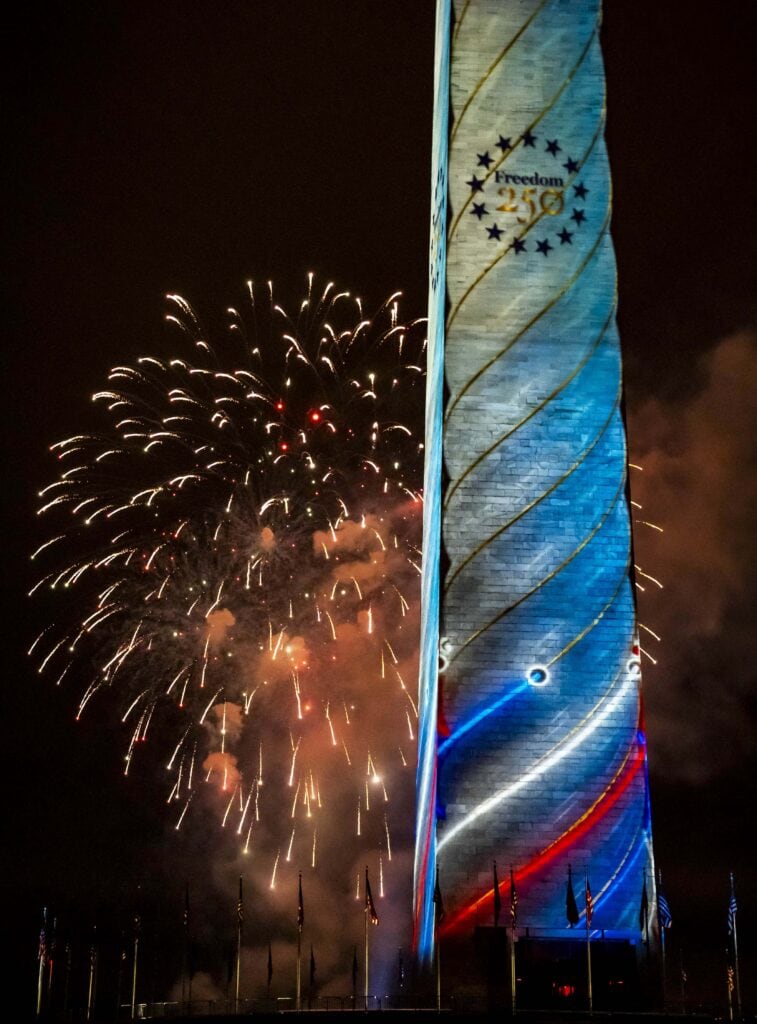
This is especially true in civic spaces and during milestones like the upcoming Freedom 250 Celebrations. The expectations are higher, the scrutiny is more intense, and the margin for error is non-existent.
Built to Endure
From the first countdown on December 31 to the final shutdown on January 5, the Washington Monument stood as a testament to what happens when preparation meets the right tools.
This success wasn’t a roll of the dice. It was the result of a “no-fail” philosophy that permeates everything we do. It’s about respecting the canvas, respecting the audience, and respecting the tools of the trade.
____________________________________________________________________________
About Event Strategies, Inc. (ESI)
Event Strategies, Inc. is a full-service production and communications firm specializing in high-impact public engagements. We offer end-to-end services—from innovative event design and custom fabrication to cutting-edge audiovisual production, strategic programming, expert media coordination, seamless guest management, government and political affairs expertise, precision logistics, dynamic graphic design, and strategic vendor procurement.
To learn more about our work on national landmarks and large-scale activations, visit us at teamesi.com.