
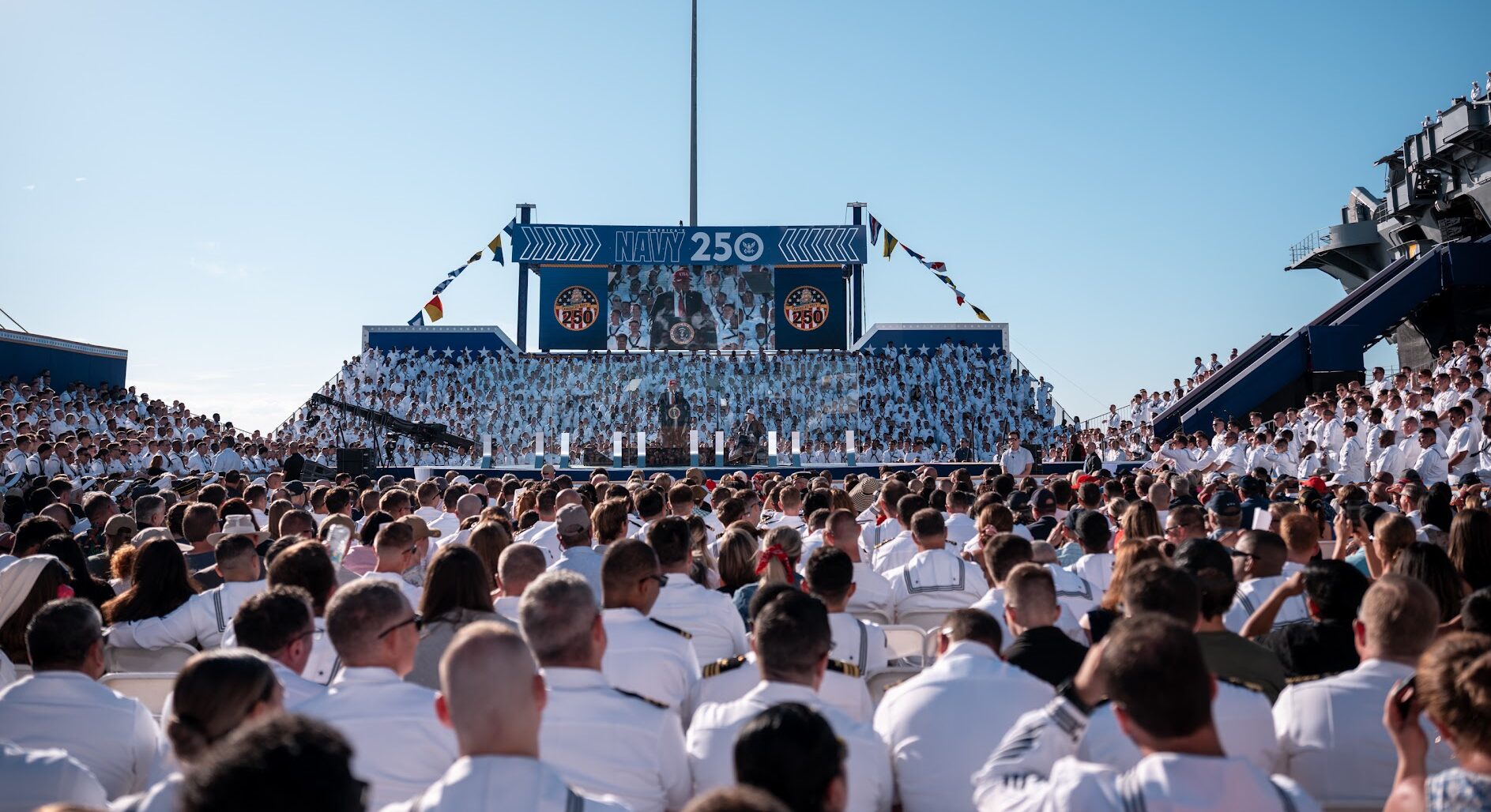

At first glance, a finished stage looks effortless—a temporary monument to perfection. You see the crisp, dynamic lighting washing over the audience, the crystal-clear audio filling every corner of the venue, the polished branding standing proud, and a seamless experience that feels as if it was always meant to be there. The illusion is complete, and it is the ultimate goal.
What most people never see is the raw, gritty reality behind the transformation. They don’t see the silent, completely empty room, the muddy field, or the concrete parking lot that must become a massive, structurally sound, show-ready environment in just 24 hours.
For expert production teams, this overnight transformation isn’t magic; it’s a meticulously choreographed ballet of labor, technology, and sheer force of will. It’s the ultimate race against the clock.
It is execution—hundreds of specialized tasks, from laying down miles of cable to hanging tons of steel, all running in parallel.
It is logistics—the precise timing of 15-ton trucks arriving, offloading, and departing, ensuring the right piece of gear is in the right person’s hand at the exact second it’s needed.
It is leadership—a single Production Manager overseeing hundreds of crew members, making instant decisions that can save hours or prevent disaster.
And most importantly, it’s the result of literally hundreds of coordinated decisions—the critical planning, the complex schematics, and the budget balancing—all happening long, long before the first truck even idles at the loading dock. This is the story of how the impossible is made possible, one intense, 60-minute interval at a time.
Before the Clock Starts: The Pre-Production Blueprint
A successful 24-hour build doesn’t actually start on site—it starts weeks, and often months, in advance. The flawless execution of the build-out is merely the result of a plan so meticulous, it often rivals the logistics of a military operation. Every beam, cable, and cue is mapped out with absolute intention and precision. This is where the budget is locked in, the risks are mitigated, and the foundation for a safe and efficient sprint is laid.
The Ground Truth: Site Walk-Throughs & Technical Assessments
Before a single piece of truss or case of equipment is delivered, the Project Manager, Producer, and various Technical Leads conduct extensive, often multi-day, site walk-throughs. This isn’t just a casual look around; it’s an intense engineering assessment where the physical limitations of the venue are scrutinized and documented. They must become intimately familiar with the space by evaluating critical factors:
Structural Integrity and Rigging: Where can the essential weight—often dozens of tons of lighting, video, and scenic elements—be safely hung? They analyze existing rigging points, maximum load-bearing capacities, and the required motor count.
The Power Grid: They must determine the available utility power and calculate the total required amperage for every light, speaker, and video screen. This often necessitates bringing in external generators, requiring precise placement and noise mitigation planning.
Dimensional Constraints: Ceiling height, weight limits, and access door widths dictate the size of the set and the method of delivery. If a piece of equipment doesn’t fit through the door, the plan fails.
Flow and Safety: They map out the audience flow, as well as critical emergency egress points that cannot be blocked by equipment or temporary structures.
Security and Access: Requirements for security access are established, especially in highly sensitive locations like military bases, convention center rooftops, or government facilities, which may require background checks for every crew member.
This comprehensive information becomes the non-negotiable backbone of the entire production plan.
From Concept to Reality: Diagrams & Approvals
Once the site data is collected, the technical team translates the creative vision into concrete, engineering-ready documents. Using specialized software like CAD and Vectorworks, layouts are created to scale, forming the ultimate instruction manual for the site crew. These diagrams detail everything:
The Set Structure: Stage elevation and dimensions, loading docks, risers, and structural supports.
Technical Placement: Exact placement of LED walls, speaker arrays, follow-spot positions, camera platforms, and press risers.
The Audience Experience: Detailed seating layouts and sightlines.
Back-of-House (BOH) Requirements: Locations for dressing rooms, catering, gear storage, and technical control booths.
Crucially, these detailed blueprints must be submitted to and approved by local authorities—most notably the Fire Marshal and Building Inspectors—to ensure compliance with all safety and building codes. Everything on paper must be legally compliant, ensuring nothing is left to dangerous, costly improvisation in the field.
Orchestrating the Arrival: Vendor Selection & Load-In Schedules
With the design approved, dozens of teams are locked in, each responsible for a specialized component: Staging, Audio, Lighting, Video/LED, Décor, Scenic/Drape, Power, Security, and Transport.
Then comes the most important operational document, the true heart of the 24-hour sprint: the load-in schedule.
This document—meticulously broken down to the minute—is designed to prevent total chaos. It dictates:
Vehicle Staging: The precise order and timing of 18-wheeler truck arrivals to prevent crippling traffic jams at the loading dock.
Dependency Sequencing: It ensures that crucial foundational elements (like the stage floor or overhead rigging) are finished before dependent systems (like the LED screen or sound speakers) arrive. This eliminates overlap and crew downtime.
Crew Allocation: It assigns specific labor teams to specific tasks at specific times, optimizing efficiency and safety.
When this pre-production phase is executed flawlessly—when the plan is tight, approved, and communicated—the 24-hour sprint becomes a controlled, possible reality. When it’s not, the delay of one truck or the mistake on one diagram can cause the entire structure to collapse, both figuratively and literally.
The 24-Hour Sprint: An Hour-by-Hour Breakdown of the Impossible
With the pre-production blueprints approved, the real test begins—a grueling, precise test of stamina, execution, and coordination. The moment the first truck backs into the dock, the official clock starts on the 24-hour sprint to showtime.
0:00 — Zero Hour: Trucks Arrive & The Safety Briefing
The venue loading dock—transforms into a hive of high-stakes activity. The Production Manager (PM) is the conductor, managing the symphony of steel and manpower. Manifests are checked against the load-in schedule down to the last flight case. Credentials are verified, and the hundreds of specialized crew members are organized into focused teams. Every person knows exactly where they are heading, and what the immediate objective is, before the warehouse doors even open.
1:00 — Staging: The Structural Foundation
Staging is always the foundational priority; you can’t hang lights until you have a floor to stand on. Stage crews work with incredible speed to build the core structure: decks, legs, stage extensions, ramps, press risers, steps, and all ADA-compliant access points. This is the first critical inspection point: the PM immediately checks elevations, load ratings, and configuration against the approved site plan, often using laser measures. Any structural flaw here impacts every department that follows. This phase must be flawless and fast, as the entire event rests on this framework.
3:00 — Audio & Lighting Move In: Miles of Cable
Once the platform is secured and clear, the technical world—Audio and Lighting—takes over. This phase is characterized by intense, parallel work and the running of miles of feeder cable and signal lines. Line array speakers, which weigh hundreds of pounds, are carefully prepared to be flown (hung) or ground-stacked. Lighting truss is swiftly assembled on the deck. Crucial dimming racks and power distro (distribution) units are placed, connected, and tested for electrical phase compatibility. Communication is at its most critical now: a lighting cable path can’t block a structural rigging point, and a speaker stack cannot sit where a main camera needs to land. Precision planning ensures these dependencies are non-conflicting.
6:00 — Video and Rigging Operations: Going Vertical
The physical ceiling comes to life as the rigging teams execute their dangerous, specialized task. They manage the heavy lifting: flying truss, securing motors, and applying triple safety checks before any substantial weight is loaded. Simultaneously, the Video/LED team begins assembling the massive display—connecting individual tiles, frames, processors, and playback racks. The screens are often built in large sections on the ground before being lifted skyward. This is the ultimate vertical coordination challenge, where the technical accuracy of the video signal lines must align perfectly with the engineering safety of the overhead motors.
9:00 — Backstage & Show Office Setup: The Command Center
While the main stage reaches critical mass, the Back-of-House infrastructure comes to life. This is the command center of the entire event. Crews set up Producer tables, Comms (communication) systems, Stage Manager stations, Green Rooms, and Teleprompter stands. WiFi drops are strategically placed, and Scenic storage zones are established to keep the stage clear. For top-tier events, the organization and operational readiness of the BOH—the quiet chaos of the production staff—is as complex and essential as the visible show floor.
12:00 — Technical Soft Testing & Power Up
Halfway through the sprint, the infrastructure is mostly complete, and the tech teams move into the vital “soft testing” phase. This is when the systems are truly powered on and tuned. Engineers perform complex tasks like audio tuning and frequency coordination (to prevent microphone interference), lighting focus and color correction, and intricate LED pixel mapping (ensuring graphics display correctly across different screen resolutions). This is often the first moment the event starts to feel real, as the stage illuminates and the first playback video loops begin.
15:00 — Front-of-House: Seating, Décor, & Audience Flow
Focus shifts to the Front-of-House (FOH) area—the audience’s experience. Crews install all audience seating, VIP rows, camera platforms, press risers, and ADA accommodations. Simultaneously, the scenic and décor teams finalize the look: hanging large banners, placing the podium branding, and installing essential signage and entry flow design. The PM maintains constant oversight here, managing all cross-traffic and ensuring no last-minute placement of a chair or banner interferes with previously established cable paths, sightlines, or safety perimeters.
18:00 — The Polish & Client Walkthrough
This is the all-important polishing phase—the rush to perfection. Technicians perform minute adjustments: final podium placement, microphone checks, backline adjustments for talent, and running teleprompter test scripts. The final touches like carpet, drape, and final scenic adjustments are made. The essential Client Walkthrough occurs now. This is where strong project management matters most: questions must be answered immediately, any critical adjustments must be made without delay, and total confidence must be instilled in the client that the stage is ready.
22:00 — Showtime Readiness & Final Checks
The build is essentially complete; the focus shifts entirely to operational readiness. This final two-hour window is dedicated to the ultimate dry run: a full technical rehearsal with talent, a final Comms system test, and last-minute checks of security positioning and seating ushers. The stage manager runs through the entire cue list. From an empty, cavernous room 24 hours earlier to a perfectly lit, fully integrated, show-ready environment, the transformation is now complete. The crew stands by, the doors open, and the audience enters. The true magic, of course, is that the build is now invisible
Vendor Coordination: The Real Backbone of the Build
Building a stage in 24 hours only works when every single vendor—from the scenic carpenter to the lighting programmer—trusts the single leader at the center: the Project Manager (PM). The PM is the general contractor of the event world, transforming dozens of specialized, independent contractors into a single, cohesive unit. Their role is not simply delegation; it is the anticipation and management of dependencies that constantly threaten to derail the timeline.
A PM must be able to hold the entire sequence of the build in their head, coordinating complex, interlocking dependencies such as:
Audio waiting on LED: Speakers cannot be flown until the massive LED wall is secured in its final overhead position.
LED waiting on Rigging: The LED wall, built on the floor, can’t be lifted until the motors and truss are precisely attached and checked by the certified riggers.
Lighting waiting on Staging: Light truss and fixtures cannot be built on the stage floor until the deck is structurally complete and signed off.
Power waiting on Venue Approval: Bringing in heavy-duty generators or tapping into venue power requires multiple sign-offs and must be done before major technical systems can be powered up and tested.
Décor waiting on Cable Paths: Scenic elements must be held back until all essential signal and power cables are run, secured, and safely taped down.
Every decision the PM makes has a cascading domino effect. Every minor error costs valuable time that cannot be recovered. Every stall—even a 15-minute wait for a scissor lift—can compromise the entire show schedule. For expert teams like ESI, their core strength is acting as the central intelligence and command center—managing every moving part until the entire complex machine clicks into perfect sync.
Managing the Chaos: What No One Talks About
The pre-production plan is a masterpiece of theory, but the build site is a harsh proving ground of reality. Even the most perfect plan gets tested instantly onsite. The difference between a smooth opening and outright panic is not the existence of problems, but the quality of the response.
The critical difference between panic and success is Leadership. It requires calm, objective decision-making, the ability to activate backup plans without hesitation, and a team that trusts each other implicitly. Ultimately, it comes down to a Project Manager who has the authority, experience, and speed to make a decisive decision and communicate the new, immediate path to hundreds of people instantly.
Why Clients Choose Teams Who Can Build in 24 Hours
Not every production company can maintain this relentless pace and technical accuracy. When a client selects a fast-build team, they are investing in far more than just speed; they are purchasing reliability, efficiency, and confidence.
Clients choose seasoned event professionals because they offer a unique value proposition:
Speed + Safety: Fast does not mean reckless—it means experienced and efficient. This capability is a testament to thousands of hours of perfected logistics and safety protocols, ensuring the structural integrity of a permanent-level build in a temporary timeframe.
Reduced Venue Rental Costs: Every hour saved on site translates directly into savings on venue rental fees, security, cleaning, and utilities. Shorter build-outs can save tens of thousands of dollars in large convention centers or arenas.
Flexibility for Multi-Day Events: The 24-hour model is crucial for events that require tight, overnight turnarounds—for instance, tearing down a general session stage and building an awards gala set in the same room between midnight and 8:00 AM.
Consistency & Reliability: The ability to execute a 24-hour build consistently is impossible to fake. It demonstrates a level of technical coordination, inventory control, and skilled labor that only the most professional teams possess.
A Partner Who Handles Everything: From the initial structural drawing to the final camera cue and tear-down, the right team brings confidence and singular control. The client knows the technical burden is fully managed, allowing them to focus entirely on the content and their guests.
Conclusion: The Stage Is More Than Wood and Metal
In just 24 intensive hours, the production team achieves a total metamorphosis. An empty, sterile room or open field becomes a dynamic, storytelling platform—a place where global leaders speak, cutting-edge products are launched, history is recorded, and thousands of attendees gather for a shared experience.
It is a transformation powered not by magic, but by planning, precision, and people.
The finished stage is more than wood, metal, and wire; it is the physical manifestation of months of expert planning and a day of flawless execution. And for teams like us at ESI, that transformation isn’t an impossible task—it’s the standard.