

In the relentless, high-stakes ecosystem of global corporate production and national advocacy tours, success is ultimately dictated by human performance. The industry is saturated with discussions about the latest technological advancements—pixel pitches on LED screens, the processing power of new media servers, and the bandwidth of fiber-optic networks. However, the most sophisticated technology in the world is instantly neutralized if the operator behind the console is suffering from severe cognitive fatigue, dehydration, or a lack of clear operational direction.
At TeamESI, the philosophy is uncompromising: human capital is the ultimate competitive advantage. A legendary brand experience is never built by an unmotivated, exhausted, or under-resourced team. Treating staff hospitality as a luxury or an expendable line item is a profound operational error. Elite production requires treating the crew’s physiological and psychological needs as mission-critical variables. Investing in the human engine is not just about building culture; it is the most effective form of risk mitigation available.
Building the Command Center: The Psychological Baseline When a production team arrives at a venue for a multi-day build, the immediate priority is establishing the operational footprint. Amateurs settle for a folding table in a dark, concrete hallway. Elite teams construct a professional “Command Center.” The Production Office is the brain of the event; it must be an environment engineered for deep focus, rapid problem-solving, and seamless communication.
This space requires dedicated, high-speed fiber-optic internet drops, specifically isolated from the venue’s guest networks, ensuring project managers and technical directors can download massive rendering files or update CAD drawings without latency. The room must feature redundant power stations, ensuring every tablet, radio, and laptop remains fully charged. Furthermore, the environment must project order. A “Common Operating Picture” is established on the walls—sleek, digital displays or immaculately printed boards detailing the Master Run of Show, the technical floor plans, and the live travel manifest.
When a rigger, an audio engineer, or a lighting designer walks into a TeamESI production office, they are immediately met with an environment that screams “military-grade precision.” This physical space sets the psychological baseline for the entire operation. If the command center is chaotic and disorganized, that chaos will inevitably bleed onto the main stage. Order is a deliberate choice, and the production office is where that standard is enforced.
Unified Identity: The Psychology of Gear and Communications A high-performance culture requires a strong sense of unified identity. When a crew operates as a collection of independent contractors wearing mismatched clothing, they perform like individuals. When a crew is outfitted in premium, unified apparel, they perform as an elite unit.
Deploying professional, branded gear is not a marketing exercise; it is an exercise in operational security and psychological ownership. When the entire technical team is unified in high-quality TeamESI apparel, venue security instantly recognizes who possesses all-access clearance. The corporate client immediately knows who holds the answers. Most importantly, the crew members themselves feel a deep sense of belonging to an organization that operates at the highest tier of the industry.
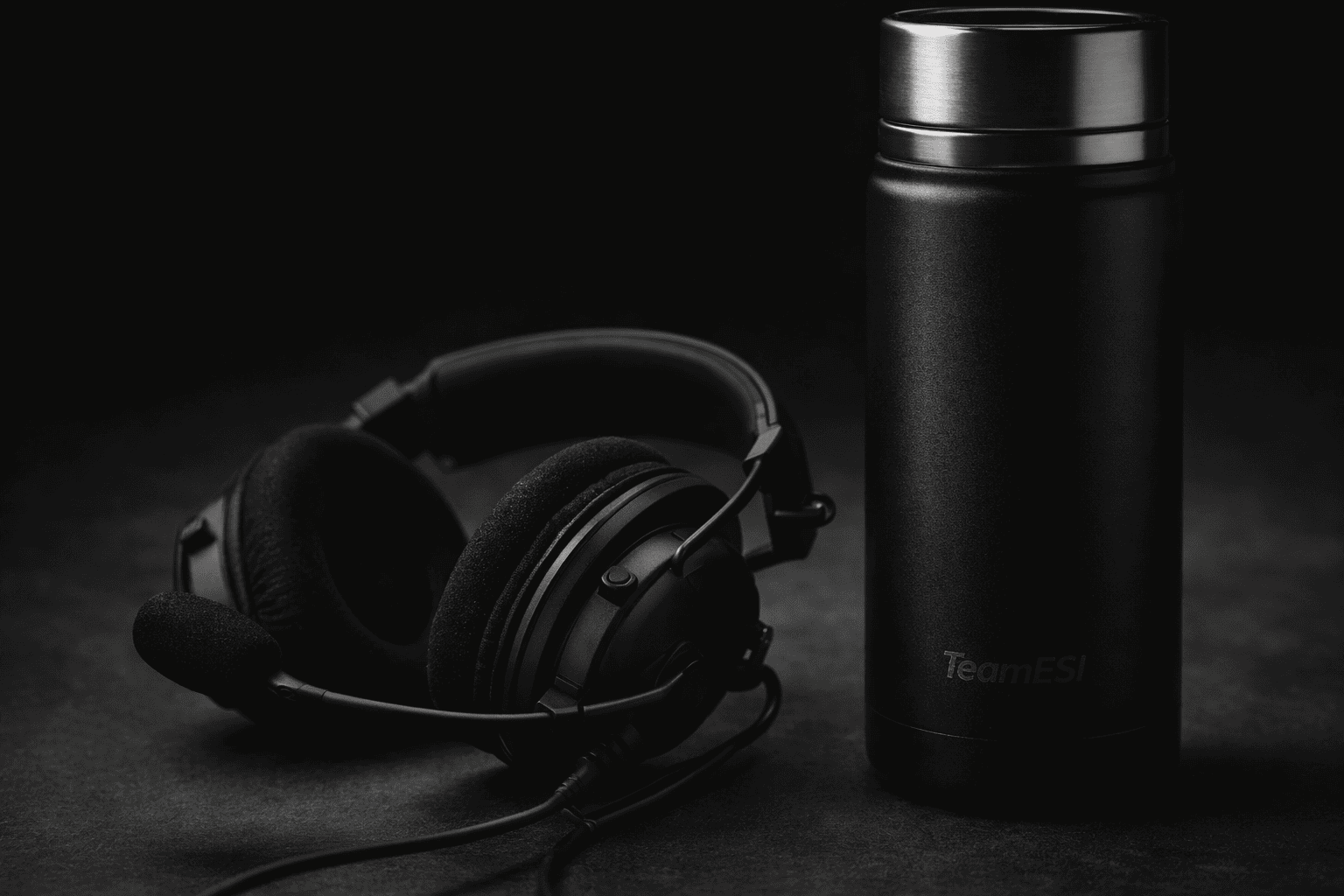
This unified identity is fortified by immaculate radio communications. In a massive arena or a sprawling convention center, the radio network is the digital nervous system of the build. Providing cheap, static-filled radios is a recipe for disaster. Every technical lead must be equipped with a high-fidelity, multi-channel transceiver paired with a professional noise-canceling headset. Strict “radio etiquette” is trained and enforced. The airwaves must remain sterile and reserved for mission-critical data. When communication is flawless, the speed of the build increases exponentially. In a 24-hour load-in, the inability to communicate clearly is the fastest way to derail a timeline.
Fueling the Human Engine: Strategic Nutrition vs. Catering Live event production is grueling, physical labor. It is a grind that routinely demands 14 to 16-hour shifts, requiring extreme physical stamina and hyper-focused cognitive endurance. A dangerous industry standard relies on cheap pizza, sugary sodas, and stress to push a crew across the finish line. This approach invariably leads to glycemic spikes, followed by massive energy crashes, resulting in slowed reaction times and catastrophic technical mistakes. A dropped rigging motor or a missed audio cue is often the direct result of a blood-sugar crash.
Elite production requires replacing the concept of “craft services” with “strategic nutrition.” Staff meals must be heavily catered, focusing on high-quality proteins, complex carbohydrates, and absolute hydration. A dedicated hospitality station is built within the production office, stocked with electrolyte replacements, healthy caloric options, and premium coffee.
Furthermore, fueling the engine requires enforcing the “Break.” In a high-pressure environment, technicians will often attempt to work straight through their meals to solve a complex issue. Site Leads must build strategic rotations into the production schedule, mandating that team members physically step away from the stage, sit down in a quiet environment, and reset their nervous systems for thirty minutes. The objective is to ensure that a Video Director is just as sharp at 11:00 PM during an emergency rehearsal as they were at 7:00 AM during load-in. Respecting the crew’s physiological needs yields massive dividends in focus, morale, and final execution.
Sustainable Intensity: The 10-Hour Turnaround Rule In an industry addicted to speed and overnight builds, burnout is the silent killer of great companies. While a production timeline may demand absolute urgency, human beings cannot safely sustain maximum intensity without adequate recovery.
Managing a crew at the highest level requires a strict adherence to the “10-Hour Turnaround” rule. From the moment the crew is dismissed from the venue at night to the moment their call-time begins the next morning, there must be a minimum of ten continuous hours. This provides the necessary time to commute to the hotel block, decompress, and secure a full sleep cycle. When planning a multi-day advocacy tour or a sprawling corporate conference, the logistical master plan must mathematically account for this turnaround. If a load-out extends until 3:00 AM, the morning call time cannot be 8:00 AM.
Operating with a tired crew is operating with a dangerous crew. Fatigue breeds complacency, and complacency in an environment involving high-voltage electricity and suspended multi-ton structures is a severe liability. By enforcing sustainable intensity, the organization protects its people and, by extension, protects the client’s brand from the catastrophic fallout of an exhausted workforce.
Managing the Principals: The Halo of Hospitality The uncompromising standard of hospitality established for the crew must extend outward, enveloping the “Principals”—the Fortune 100 CEOs, the high-net-worth donors, the political figures, and the headline entertainers.
The environment behind the stage must be as meticulously curated as the stage itself. Green Rooms and Speaker Ready Rooms are designed to function as secure, tranquil executive sanctuaries. Every specific requirement listed on a talent’s technical and hospitality “rider” is fulfilled with exact precision. However, elite hospitality goes beyond providing specific brands of bottled water; it provides the luxury of total operational confidence.
A dedicated “Talent Lead” is assigned to every VIP, serving as their single point of contact. This individual absorbs all the logistical friction, handling everything from last-minute script printing to secure transport coordination. When the talent arrives backstage, they must immediately sense that the environment is completely under control. When a CEO does not have to worry about where their lavalier microphone is or what time they are walking on stage, they are free to enter “The Zone.” That psychological security translates directly into a more powerful, authoritative performance under the lights.
Integrating Local and Union Labor: Command Through Preparation Stadium builds and large-scale convention center events frequently require the integration of local labor pools and specialized union stagehands. The mark of an elite production organization is the ability to seamlessly fold these external crews into the internal culture of excellence.
Respect is the ultimate currency on a show site. These crews are treated with the exact same dignity and hospitality as the internal TeamESI roster. “Management by shouting” is a toxic trait of amateur producers. Elite teams deploy “Management by Preparation.” When a local crew arrives for a call, they are immediately provided with a crystal-clear load-in plan, comprehensive CAD drawings, and a defined Chain of Command. When an external crew sees that the production team has done the homework, engineered a safe environment, and established a professional command center, they will universally raise their own level of performance to match the standard in the room.
Conclusion: The Operational Moat Financial accountability is always paramount. Some executives view expansive staff hospitality as an unnecessary inflation of the production budget. Elite operators view it as the cheapest, most effective insurance policy available. The cost of a catered, high-protein staff meal is statistically invisible compared to the financial damage of a severed fiber line or a failed broadcast caused by an exhausted, unfocused engineer.
By building the command center, providing strategic fuel, mandating recovery, and unifying the team under a banner of elite professionalism, an unbreakable operational moat is established. The team handles the logistical care so the crew can execute the logistical mastery. That is the true definition of a competitive advantage.