The difference between a flawless corporate production and a logistical disaster usually comes down to the first sixty minutes spent in an empty room. In the industry, this critical window is known as the Site Survey. While many event planners are looking at the carpet colors, the catering footprint, or the chandelier placement, top-tier technical teams are hunting for the structural realities that will dictate the entire duration of the build and the show.
Execution is a result of radical preparation. Every site visit must be approached with a highly specific, operational set of eyes. The goal is not to admire the architecture; the goal is to pressure-test the infrastructure. After decades of managing high-stakes advocacy campaigns and large-scale entertainment events, experience dictates that a venue doesn’t always tell the full story on its sell sheet. The Site Survey is where the truth is verified, securing the operational data needed to execute at the highest level.
The Logistics of the Loading Dock and Freight Management
Logistics start at the back of the house. The audit begins at the loading dock because that is the primary bottleneck for every piece of critical infrastructure brought on-site. The team measures the height of the loading bays and calculates the turn radius for the transport vehicles. If an advocacy roadshow requires 53-foot trailers, a tight alleyway or a poorly angled dock can add critical hours to a load-in schedule. Time is a currency that cannot be wasted. It is imperative to know in advance if a “pusher” crew is required or if the grade of the concrete ramp is too steep for high-weight rolling racks.
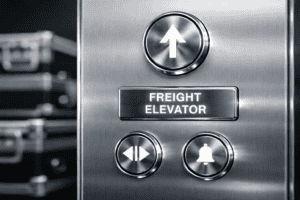
Furthermore, the audit must look for the “freight elevator trap.” This is a classic industry pitfall that separates seasoned veterans from amateurs. A venue might claim they have a high-capacity freight elevator, but the internal dimensions, the door clearance, and the strict weight limit must be physically verified. If a rack of line-array speakers or a heavy-duty mobile generator exceeds that limit by even fifty pounds, the entire production schedule shifts into crisis mode. The “cycle time” of the elevators is also timed. If it takes five minutes for a lift to ascend, unload, and return, and there are twelve truckloads of gear waiting on the dock, that inherent lag must be built directly into the union labor call.
The Path of Least Resistance and Asset Protection
The physical path from the loading dock to the stage is just as vital as the dock itself. Every turn, every hallway, and every flooring transition must be mapped out. If the operation involves moving heavy staging equipment or custom-fabricated scenic elements for a brand experience, it is critical to know if the crew will be crossing imported marble that requires Masonite protection, or plush ballroom carpet that will drastically slow down a crew pushing five-ton loads.
Door widths and header heights are audited with a laser measure. There is nothing more detrimental to a timeline than realizing a custom-built, $50,000 stage set is two inches taller than the primary doorway to the main room. During the Site Survey, every stated “clearance” must be confirmed as physically accurate. “Pinch points”—narrow corridors where two road cases cannot pass each other simultaneously—are also identified. By identifying these zones, the Site Lead can choreograph the flow of the crew, establishing one-way traffic patterns to avoid a gridlock situation during the high-pressure, high-cost hours of the build.
Power Infrastructure: Amperage, Tie-ins, and Stability
Once the main room is reached, the immediate focus shifts to the power panels. A professional production team never accepts a venue’s word for available amperage. The “tie-ins” and their physical distance from the stage are audited. If the event includes a television-grade broadcast for a global corporate conference, a voltage drop caused by running three hundred feet of feeder cable through a service kitchen is an unacceptable risk.
The audit strictly differentiates between “clean power” and “dirty power.” In many older or multi-use venues, the HVAC system, the kitchen elevators, or the refrigeration units might be wired to the same transformer as the ballroom outlets. When a massive walk-in freezer kicks on, it can cause a power surge resulting in an audible pop in the audio array or a visual flicker across a massive LED wall. These risks are identified early. If the venue’s internal power isn’t sufficient or perfectly stable, coordination for external mobile power units or secondary “whisper-quiet” generators must begin immediately. The event must stay live, entirely independent of the building’s electrical flaws.
The Physics of the Ceiling: Rigging and Load Limits
A significant portion of the Site Survey is spent looking up. For large-scale entertainment and complex brand environments, the ceiling is the most valuable real estate in the room. Every physical rigging point is verified against the digital CAD (Computer-Aided Design) drawings. The team looks for HVAC ducts, fire sprinklers, or decorative lighting fixtures that might obstruct a crucial sightline for a projection map or a lighting truss.
Weight ratings are treated as absolute law. Every structural point in a ceiling has a maximum safe load limit. If the design calls for hanging a massive, multi-ton lighting rig or a heavy PA system, it is vital to know exactly what the steel I-beams can handle. If a venue enforces a strict “no-rigging” policy, the entire technical approach must pivot to ground-supported truss structures. Discovering a rigging limitation during the Site Survey allows for budget adjustments, equipment list updates, and design rendering modifications before the trucks are even loaded. It is infinitely more efficient to rent ground-support truss in the planning phase than it is to scramble for hardware during an overnight load-in.

Communication Infrastructure: The Fiber-Optic Backbone
In the modern landscape of event-based communications, digital connectivity is the lifeline of the operation. The Site Survey locates the fiber-optic entry points and the primary IT closets. If the operation requires executing a national advocacy campaign with a live, two-way broadcast feed, the line of sight for mobile satellite uplinks must be checked.
Shared venue Wi-Fi is never utilized for a mission-critical production backbone; instead, dedicated, isolated fiber lines must be dropped to ensure the message gets out without a single dropped frame. Internal distribution is also mapped. If the production office is located in a basement boardroom and the main stage is on the fourth floor, existing conduit or wall sleeves must be located to pull internal CAT6 or fiber lines. If the venue lacks this infrastructure, cable bridges and yellow-jacket floor covers must be utilized to protect the lines in high-traffic areas. A single tripped-over ethernet cable can kill a global livestream, so cable paths are planned with the same militant precision as the stage design.
Acoustics and Environmental Control
Every physical space has a unique acoustic signature. The perimeter of the room is walked to identify acoustic challenges—bouncing echoes from glass architectural walls, “muddy” bass frequencies trapped in low-ceiling corners, or the persistent hum of an overactive industrial AC unit. For a high-stakes corporate keynote, audio clarity is the single most important factor. If the audience cannot clearly hear the speaker’s message, the event is a failure. The team identifies exactly where acoustic treatments, sound-dampening drapery, or secondary “delay speakers” must be placed to ensure every seat in the house receives the same crystal-clear sonic experience.
HVAC control is also negotiated during this walk. Can the temperature be controlled remotely from the production office? When a room is packed with hundreds of guests alongside massive lighting and video equipment, the ambient temperature rises rapidly. Coordination with the building’s engineering staff establishes a “pre-cooling” protocol before the doors open. Guests must stay comfortable and focused on the content, not distracted by the temperature of the room.
Life Safety: The Non-Negotiable Operational Layer
The Site Survey is fundamentally a life-safety audit. The ideal locations for medic stations are identified, emergency egress routes are audited, and the safe flow of the crowd is calculated. For high-occupancy events and political advocacy rallies, crowd dynamics are treated as a science. Potential bottlenecks—where hundreds of people might converge during a session break or a sudden evacuation—are identified and mitigated through intelligent floor plans.
The locations of fire extinguishers and fire alarm pulls are verified to ensure that custom stage designs or scenic backdrops do not block any required exit paths or safety equipment. If the run of show utilizes theatrical haze or pyrotechnics, coordination with venue management and the local Fire Marshal is necessary to temporarily bypass specific smoke detectors. Life safety is the one area of production where there is absolutely zero margin for error, and those protocols are built into the very first layer of the operational blueprint.
The Principal Path: VIP Movement and Security
The “Principal Path” is scouted and locked down. It is critical to know exactly how a Fortune 100 CEO, a high-level donor, or a headline entertainer gets from their secure vehicle to the green room, and ultimately to the stage. Private, backstage routes are established to keep high-profile individuals completely isolated from the chaos of a crowded lobby.
The Green Room is audited for its proximity to the stage—if the walk takes three minutes, that is three minutes of “dead air” that must be accounted for in the master Run of Show. The backstage infrastructure is also assessed to secure a location for the Production Office and a dedicated “Ready Room” for the speakers. The individuals delivering the message must have a quiet, professional environment to prepare, entirely insulated from the noise of the load-in.
The Culmination: Generating the Venue Report
The ultimate objective of the Site Survey is not simply to collect measurements; it is to generate the Venue Report. This comprehensive document serves as the operational bible for the project’s feasibility. The Venue Report compiles all the hard data—from the freight elevator weight limits to the electrical tie-in locations—and presents a clear, objective assessment of the space.
This report is utilized to determine the true viability of the venue. Can the space safely and effectively support the creative vision without compromising the budget or the timeline? If the Venue Report reveals that the ceiling cannot support the required lighting rig, or that the power grid cannot handle the broadcast requirements, the production team can raise the flag before contracts are signed. The Venue Report transforms assumptions into facts, allowing event professionals to make calculated, data-driven decisions.
The Conclusion of the Audit
The Site Survey is a discipline of ownership. It is the exact moment where the operation moves seamlessly from the “what if” of the planning phase to the “how to” of the execution phase. By generating a meticulous Venue Report, the logistical problems that haven’t even happened yet are already solved.
A room is not just a ballroom; it is a machine. The objective is to ensure that every gear, every cable, and every crew member moves in perfect, synchronized precision. That elite level of preparation is the operational advantage that separates a standard event from a masterclass in execution. The room is audited, and viability is proven, so that when the lights go down and the program begins, execution occurs with absolute, unshakeable confidence.