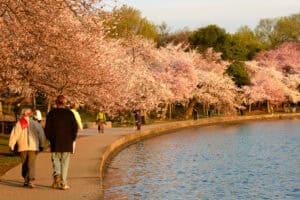
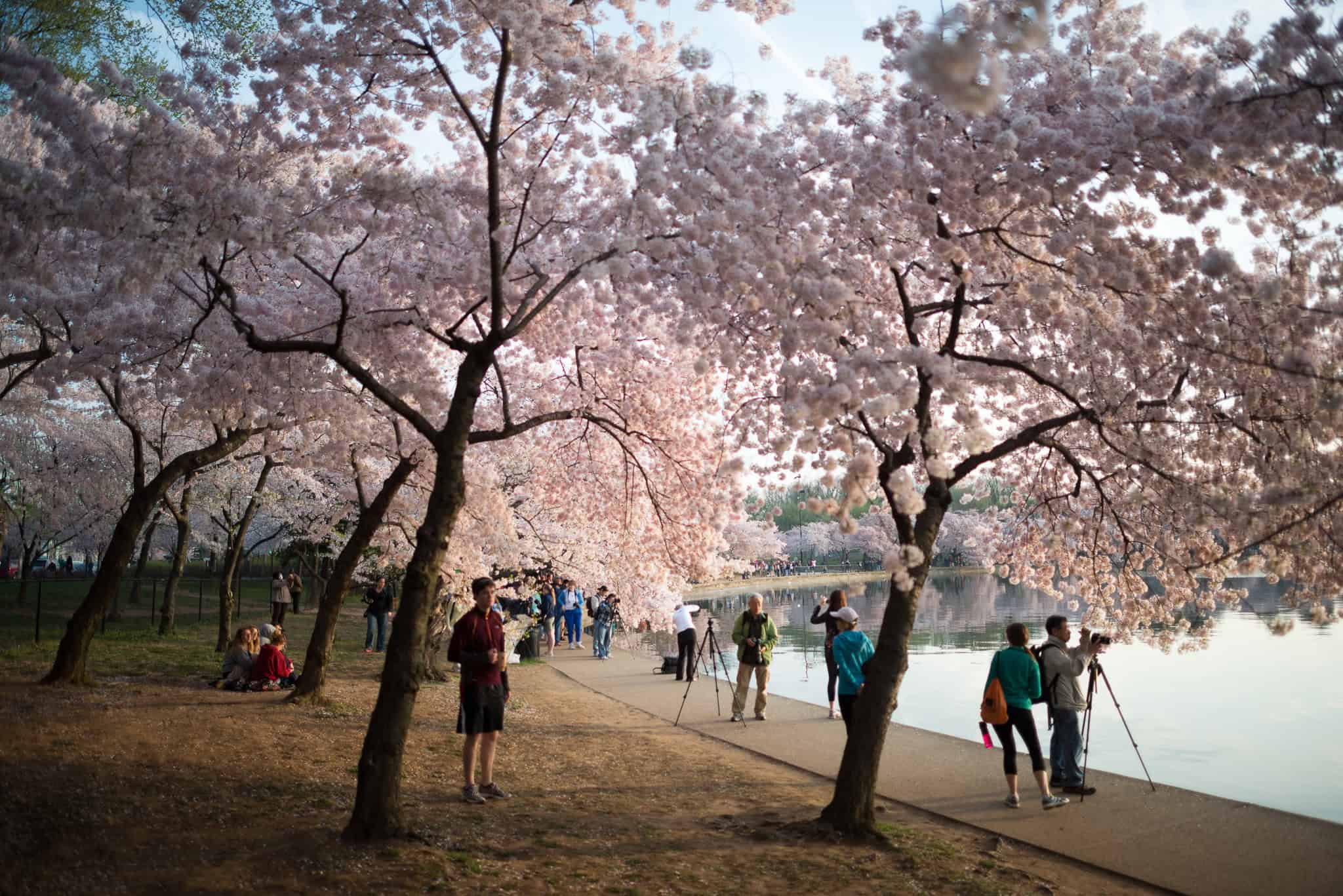

In the portfolio of global events, there are festivals that take place within a venue, and then there are festivals that take over a seat of government. As the 2026 season officially arrives in Washington, D.C., the industry isn’t just looking at the trees; we are looking at the Supply Chain of Joy.
The National Cherry Blossom Festival is an uncompromising demonstration of Municipal Coordination. For four weeks, the city transitions from a center of global policy into a high-performance stage for over 1.5 million people. To execute this with the required level of “Executive Standard” takes a level of planning that borders on the heroic.

A Century of Soft Power and Hard Logistics
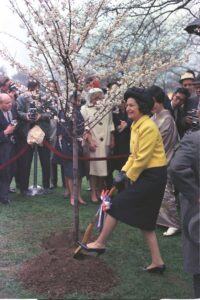
The history of the blossoms is a story of international diplomacy. In 1912, Mayor Yukio Ozaki of Tokyo gifted 3,000 cherry trees to the city of Washington as a gesture of friendship. What began as a simple planting ceremony has evolved into a massive, multi-city cultural pillar. We remember the resilience of the festival during global shifts, and we celebrate the “2026 Peak Bloom” as a moment of absolute national unity.
But for the technical teams behind the scenes, the history is also one of engineering evolution. Moving from small gatherings to the massive scale of the Blossom Kite Festival and the National Cherry Blossom Festival Parade has required an obsessive focus on “Public Space Engineering.” Every permit, every barricade, and every temporary power drop is a piece of a puzzle that spans federal and local jurisdictions.
The Architecture of the Mall: Managing the Mass Move
The National Mall is perhaps the most difficult “venue” on earth. It is a space defined by monuments, high-security perimeters, and strict federal regulations. To build a festival here, the production team must master the Physics of the Crowd:
- Frictionless Wayfinding: In a space that spans miles, the “First Five Minutes” of the guest experience is critical. The organizers utilize a sophisticated network of digital signage and high-visibility ambassadors to transition tourists from the Metro system to the Tidal Basin without creating “bottlenecks.”
- The Mobile Command Center: Because permanent infrastructure on the Mall is limited, the festival relies on “The Power Grid Paradox.” Portable, “whisper-quiet” generators and mobile bonded-cellular towers are deployed to ensure that the production office has the “Bandwidth for the Broadcast” regardless of the crowd density.
- Petalpalooza and the Night Sky: The high-decibel production at the Yards Navy Yard, featuring live music and a choreographed fireworks finale, is a masterclass in Acoustic Perimeter Management. It requires delivering stadium-level energy while coexisting with a working naval base and residential developments.
The “No Trace” Protocol: Respecting the Monumental
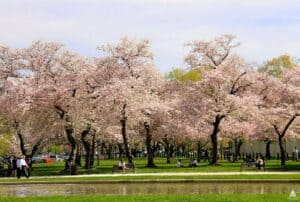
What we at ESI admire most about the Cherry Blossom Festival is the “Legacy of the Build.” When you are operating on land managed by the National Park Service, the “Post-Show Clean” is not just a best practice; it is a federal mandate.
The organization’s commitment to a “Zero Waste” environment is visible in every sector of the festival. From the responsible disposal of staging materials to the protection of the delicate root systems of the historic trees, the team demonstrates a level of Sustainable Intensity that should be the gold standard for every outdoor event. They treat the monuments with the reverence of a museum and the energy of a festival.
A Shout-Out to the Civic Athletes
As the 2026 parade—led by spectacular floats and international performers—moves down Constitution Avenue, we want to acknowledge the “Civic Athletes.” To the permit coordinators who navigate the labyrinth of D.C. bureaucracy, the security leads who manage the “Invisible Shield” around the attendees, and the stage managers who coordinate the “Quick Change” between festival events: your work is the backbone of the city’s spring.
The National Cherry Blossom Festival proves that when a city, its people, and its technical experts align, the result is more than just a beautiful view—it is a triumphant demonstration of what is possible when we design for the public good.
Conclusion: The Bloom of Excellence
When the final petal falls and the “Midnight Strike” concludes, the city of Washington will return to its standard rhythm. But the impact of the 2026 festival will remain in the data—the “Experiential ROI” of a million smiles and the seamless safety of a massive public gathering.
To the organizations and teams bringing the Cherry Blossom Festival to life: your pursuit of municipal perfection is an inspiration. You haven’t just managed a bloom; you have engineered a memory for the world. You have already won the room.