

Within the realm of audio and visual production, many companies have the opportunity, or eventually find themselves, involved in community events. These events offer a unique chance to make a meaningful impact on people from all walks of life. Attendees may include long-time local residents who attend annually, casual passersby exploring the event for the first time, or even tourists experiencing the city or town for the first time.
For production companies, this diversity presents a powerful opportunity to shape how people perceive their own community. Through carefully executed sound, lighting, visuals, and live experiences, production teams can create moments that leave lasting impressions and foster a sense of pride and connection.
In this blog, we’ll take an in-depth look at how audio and visual production companies plan, manage, and execute community events. From small-scale gatherings to large-scale celebrations, we’ll explore the technical strategies, equipment choices, and teamwork that ensure each event succeeds. We’ll also highlight how, regardless of budget, these events contribute to long-term community cohesion and help attendees form a stronger connection to their home city or town.
The Power of Sound: A Guide to Audio Production of Community Events
Audio production is a cornerstone of any successful community event. Whether you’re organizing an outdoor concert, a yoga session, or a movie night, proper audio planning ensures that your audience can hear clearly and enjoy the experience. Below is a comprehensive guide to help you plan audio production based on event type, size, and venue.
Determining Event Type and Audience Size
The first step is understanding the scope of your event:
- Large Outdoor Concerts: Require full-scale line array systems to deliver clear sound across wide areas for hundreds or thousands of attendees.
- Small Outdoor Events (Yoga, Workshops): Often use portable column array PA systems, which are lightweight, easy to set up, and provide sufficient coverage for smaller crowds.
- Community Movie Nights: Require compact PA systems or small line arrays, focusing on clarity of dialogue and balanced sound rather than loud volume.
The size of your audience directly affects the number of speakers, the need for subwoofers, and overall system power.
Choose the Right Audio System
Line Array Systems:
- Ideal for concerts, festivals, or large-scale outdoor events.
- Provide even coverage across large distances.
- Allow for professional mixing of multiple microphones, instruments, and playback sources.
Column Array or Portable PA Systems:
- Suitable for small- to mid-sized events.
- Easy transport, minimal setup, and good sound dispersion for smaller crowds.
- Some models include built-in Bluetooth or mixer capabilities.
Subwoofers:
- Enhance bass and depth, especially for music-heavy events.
- Optional for smaller events, but recommended for concerts or movie nights with dynamic soundtracks.
Essential Equipment and Setup
- Mixers: Essential for balancing multiple audio sources, adjusting volume, and controlling EQ. Small analog or digital mixers (like Yamaha MG series or Behringer Xenyx) work for most community events.
- Microphones: Handheld, lapel, or headset microphones depending on whether speakers, performers, or instructors need to be amplified.
- Cables and Power: Ensure you have sufficient XLR cables, speaker cables, and extension cords with surge protection.
- Monitors: Stage monitors are useful for performers to hear themselves during concerts or live performances.
Venue and Environment Factors
- Outdoor venues may require more speakers to cover open spaces and overcome ambient noise.
- Consider wind, weather, and acoustic reflections when positioning speakers.
- Test sound levels during setup and adjust for audience size and location.
Technical Setup and Soundcheck
- Conduct a full soundcheck prior to the event to test all microphones, speakers, and playback devices.
- Adjust EQ and volume levels for clear dialogue and balanced music.
- For outdoor movie nights, ensure dialogue is intelligible even for attendees at the back of the viewing area.
Best Practices
- Always have backup cables and power sources.
- Assign a technician or volunteer to monitor sound levels during the event.
- Keep the audience’s comfort in mind – avoid excessive volume that can cause fatigue or complaints.
- Record or livestream – make sure your audio mix translates well to recordings or broadcasts.
With proper planning and the right equipment, audio production can transform a community event from good to exceptional, ensuring all attendees enjoy a clear, immersive, and professional sound experience.
The Visual Experience
Visual production is as critical as audio production and can significantly influence the success of a community event. The technical components encompass LED walls, jumbotrons, projection systems, lighting rigs, video switchers, and media servers. Large-scale displays, such as modular LED walls or high-lumen projectors, ensure visibility across expansive outdoor or indoor venues, while HD cameras capture multiple angles for live feeds and recordings.
Key technical roles include:
- Video Director: Oversees camera feeds, switching, and live display management.
- Camera Operators: Manage PTZ, handheld, and stationary cameras to provide dynamic coverage.
- Lighting Technicians: Design and program lighting sequences that complement visuals and camera capture.
- Media Server Operator: Manages playback of videos, animations, and graphics, ensuring synchronization with audio and lighting.
Equipment considerations:
- LED Walls/Jumbotrons: Evaluate pixel pitch, resolution, and brightness to match venue size and ambient light conditions.
- Cameras: PTZ and broadcast-quality cameras with signal routing via SDI or HDMI.
- Video Switchers: Multi-input switchers allow seamless transitions and integration of live and pre-recorded content.
- Cabling and Signal Distribution: Use fiber or SDI for long-distance video transmission to minimize signal degradation.
For events that are streamed or televised, attention to frame rates, color correction, and video latency is critical. Proper integration of visuals, cameras, and lighting ensures a professional-grade production that enhances audience engagement and leaves a lasting impression.
Beyond the Stage: Talent and Vendor Management
Effective talent management is a critical technical component of community events and concerts. Beyond the administrative and hospitality considerations, it involves detailed coordination of performance logistics, stage management, and technical production requirements. This includes ensuring that performers’ hospitality riders are fulfilled, monitoring load-in and load-out schedules, coordinating rehearsal spaces, and integrating performers’ technical needs such as microphone placement, instrument amplification, and monitor mixes.
Technical coordination for live performance includes:
- Stage Managers: Oversee timing, performer cues, and stage transitions.
- Audio Engineers: Handle live sound reinforcement, monitor mixes, and instrument inputs according to performers’ specifications.
- Lighting Designers: Program lighting cues that complement the musical performance and ensure visual clarity.
- Video Production Staff: Manage live feeds or recorded content, synchronizing visuals with live music.
Music selection itself is also a technical and strategic process. Curating the right performers, setlists, and musical genres requires understanding sound dynamics, crowd density, and acoustic properties of the venue. This may involve:
- Adjusting arrangements for outdoor versus indoor venues.
- Balancing dynamic range and volume to ensure clear audience experience.
- Aligning musical transitions with lighting and video cues for a synchronized performance.
Integrating talent management with technical production and music curation ensures that each event runs smoothly, maximizes audience engagement, and achieves professional-quality performance standards.
Vendor Management
Vendor management is a critical aspect of community event production, even though most audio and visual production companies typically do not handle it directly. Event Strategies Inc. (ESI), however, has a dedicated department responsible for site management, press coordination, and comprehensive vendor oversight. This team ensures that all non-AV elements of an event are executed seamlessly, allowing the production team and client to focus on the technical and creative aspects of the event.
For example, whether producing a farmers market, a festival, or a political rally, ESI’s vendor management team coordinates every detail. This includes arranging chairs and tables, drafting and distributing vendor instructions, scheduling load-in and load-out times, and addressing vendor-specific needs throughout the event. The team also ensures compliance with site regulations and maintains communication between vendors, staff, and clients to prevent operational issues.
By handling all vendor-related logistics, ESI provides a structured, organized environment that allows the audio and visual production teams to focus entirely on delivering high-quality sound, lighting, and visual experiences, ultimately contributing to the overall success and professionalism of the event.
The Project Manager: The Back of an Event
When organizing a community event, the individual with the greatest responsibility is typically the event project manager or project coordinator. This role encompasses a wide range of tasks, from collaborating with the client to finalize event schedules, securing necessary permits, and developing comprehensive crowd flow and emergency response plans. The project manager ensures that all aspects of the event adhere to local regulations and safety standards, providing a secure and enjoyable experience for attendees.
In addition to these planning duties, the project manager is responsible for overseeing the entire event team, coordinating between departments such as audio/visual production, talent management, and vendor services. Budget management is another critical component, requiring careful allocation of resources to balance costs while maintaining high-quality production standards. This includes negotiating contracts, monitoring expenditures, and ensuring that all elements of the event are delivered on time and within budget.
The role demands strong organizational skills, effective communication, and the ability to anticipate and solve problems in real time. By successfully managing planning and logistics, the project manager ensures that every detail of the event is meticulously executed, creating a seamless experience for both the client and the community.
The Lasting Community Impact
The choice of a production company can significantly influence the overall impact an event has on the community. A well-produced community event provides a unique opportunity for individuals from diverse backgrounds to come together, set aside differences, and celebrate their shared home. It is a moment where community identity is reinforced and connections are strengthened.
When executed effectively, community events do more than entertain, they foster a sense of pride, unity, and belonging among attendees. The quality of audio, visual, and logistical production can elevate the event experience, making it memorable and encouraging repeat participation. Over time, consistently well-managed events build loyalty and anticipation within the community, creating a tradition that residents look forward to each year.
Furthermore, impactful community events can generate long-term benefits beyond the day of the event itself. They can enhance local engagement, support small businesses and vendors, and even inspire new civic initiatives. By choosing a production company that understands both the technical and cultural aspects of community events, organizers can ensure that each gathering leaves a lasting, positive impression on the community.
Long-Term Benefits of Professional Event Management
The advantages of professional event management extend far beyond the immediate execution of a single event. Choosing a credible and experienced event management company ensures that your reputation is maintained at the highest standard, instilling confidence in clients, attendees, and stakeholders alike. Professional management brings consistency and reliability, which are particularly important for recurring community events.
Over time, this consistency allows event organizers to refine their processes and improve outcomes based on lessons learned from previous events. Each year’s experience contributes to a deeper understanding of audience preferences, logistical efficiencies, and technical optimizations, resulting in smoother operations and more engaging experiences.
Moreover, professionally managed events often attract greater interest from sponsors, partners, and media outlets. High-quality production and seamless execution make the event more appealing for collaboration, promotional opportunities, and coverage, thereby increasing visibility and resources. The community, in turn, develops anticipation and loyalty for these events, looking forward to each iteration with heightened excitement.
Ultimately, professional event management not only ensures the success of individual events but also strengthens the long-term impact of community gatherings, fostering pride, connection, and engagement that benefits both organizers and attendees year after year.
Here’s a much longer, polished rewrite of your Real World Example section that makes it more professional and vivid:
A Real-World Example: The Great American Farmers Market
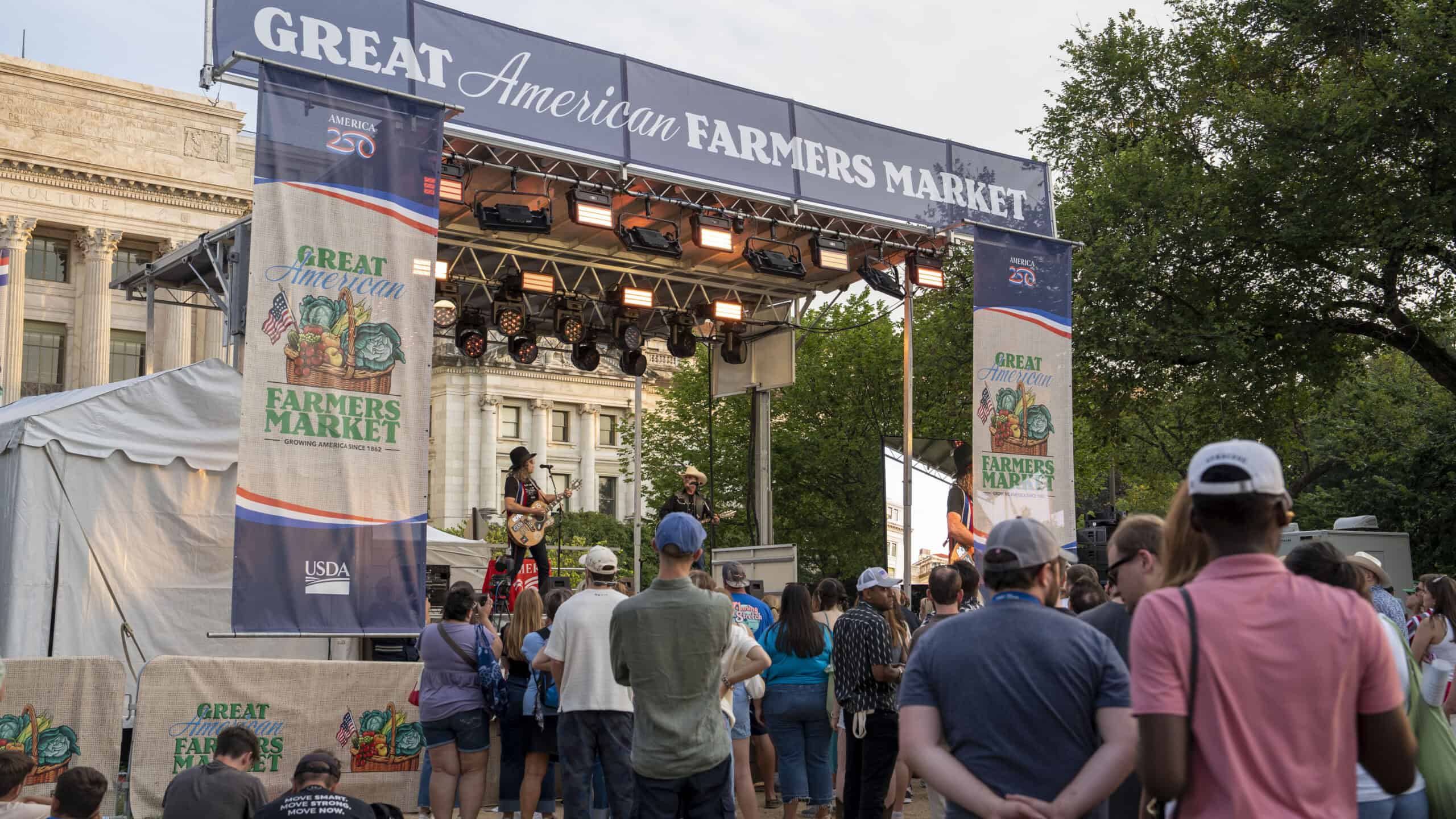
A powerful illustration of the impact that professional A/V production and event management can have on community gatherings comes from a recent project undertaken by ESI. In August 2025, ESI partnered with the United States Department of Agriculture (USDA) to help produce the Great American Farmers Market in Washington, D.C.—an event that took place right on the historic National Mall from August 3rd through August 8th, coinciding with National Farmers Market Week.
This large-scale community celebration brought together dozens of fresh produce vendors and agricultural exhibitors from across the country, each given the opportunity to showcase and sell their products in one of the most visible and symbolic locations in the nation’s capital. The event wasn’t simply about commerce; it was designed to celebrate American agriculture, highlight sustainable farming practices, and provide families and visitors with an immersive cultural experience.
ESI’s role extended well beyond setting up equipment. The team was responsible for producing a diverse lineup of live entertainment, including performances by local and national bands, guest appearances from government officials and the U.S. Secretary of Agriculture, and even unique experiences such as goat yoga sessions, which drew both locals and tourists alike. In addition, ESI supported film screenings on the lawn, including a community viewing of Charlotte’s Web, which brought children, families, and visitors together in a relaxed, outdoor setting.
The success of the event was largely due to the meticulous vendor and site management. ESI’s team managed the vendor setup, coordinating with the tent company to ensure every tent was properly placed and secured. This included handling a variety of setups, from standard vendor booths to more complex arrangements. For example, Chobani had the largest vendor footprint, which featured a food truck and a large tent. The site management team also worked closely with vendors who brought in large, unique exhibits, such as live cows and golden tractors, ensuring their placement was safe and well-integrated into the event layout.
While this was not the first time ESI had contributed to a community-focused event, the experience underscored the profound and lasting impact such gatherings can have. Seeing the National Mall transformed into a vibrant hub of activity, where people danced to live music, engaged with local farmers, learned about agriculture, and simply enjoyed being together, was a reminder of why events like this matter. They don’t just provide entertainment; they build pride, foster connection, and create memories that strengthen community bonds long after the event concludes.
Conclusion
Community events are more than just gatherings—they are opportunities to bring people together, celebrate shared culture, and create lasting memories. The success of these events relies heavily on the seamless integration of audio and visual production, talent and music management, vendor coordination, meticulous planning, and professional event management. Each element plays a crucial role in delivering an immersive and memorable experience for attendees.
High-quality audio and visual production ensures clarity, engagement, and a professional presentation, while thoughtful talent selection and music curation enhance the overall atmosphere. Vendor management and logistics provide the structural backbone of the event, allowing AV teams to focus on technical execution. Meanwhile, professional event management guarantees consistency, safety, and operational efficiency, paving the way for long-term growth and repeated community engagement.
Ultimately, well-executed community events foster pride, unity, and loyalty among attendees. They strengthen connections within the community, generate opportunities for partnerships and media coverage, and create traditions that people look forward to year after year. By investing in professional AV production and event management, organizers can ensure that every community event leaves a lasting, positive impact that resonates far beyond the day of the event itself